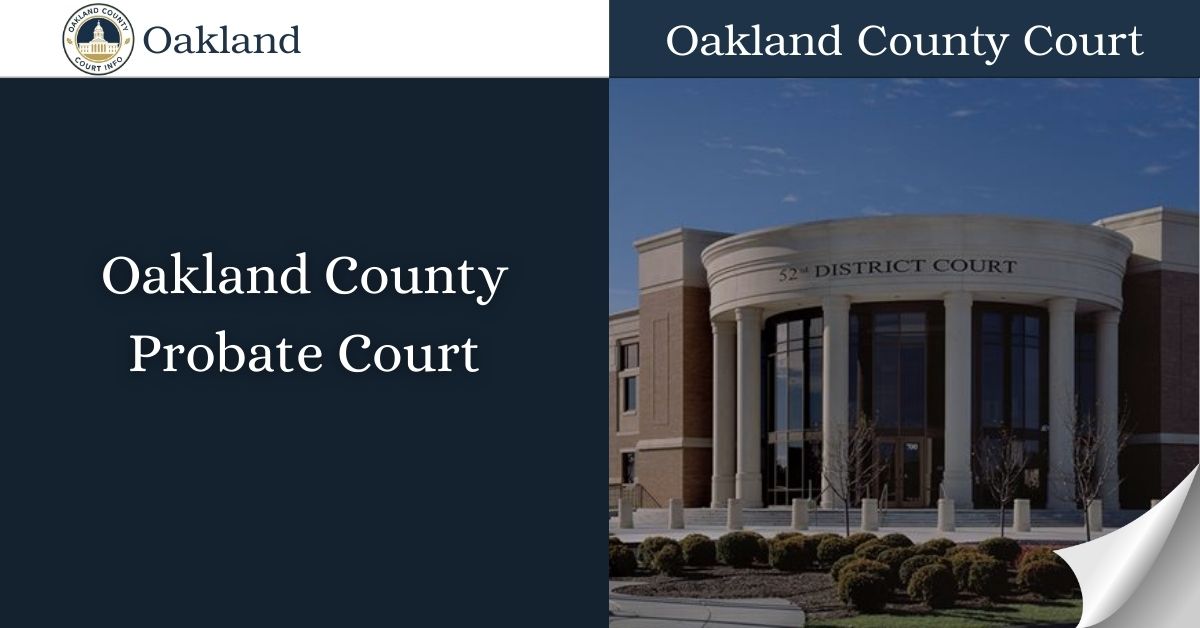
The Oakland County Probate Court handles legal matters related to estates, wills, guardianships, and conservatorships. It ensures that assets are distributed correctly, wills are validated, and individuals who cannot make decisions for themselves receive proper oversight. The court also provides guidance for families and beneficiaries to manage legal responsibilities efficiently and avoid disputes.
This page covers key services offered by the Oakland County Court, including estate administration, probate procedures, guardianship and conservatorship, eFiling, fees, and accessing court records. Users can quickly navigate to each section for clear instructions, forms, and requirements. With these resources, residents can complete necessary filings and track cases with confidence.
Oakland County Probate Court
The Oakland County Probate Court handles legal matters related to estates, wills, trusts, and mental health. It also oversees guardianships, conservatorships, and certain court-ordered mental health commitments.
Divisions of the Court
The court operates primarily through two main divisions:
- Estates Division: This division manages matters related to decedent estates, whether a person left a will or not. It oversees:
- Probate of wills
- Filing and safekeeping of wills
- Administration of trusts
- Guardianship and conservatorship for minors or adults who cannot manage their own affairs
- Mental Health Division: This division focuses on legal matters involving individuals who require mental health support or supervision, including:
- Court-ordered mental health commitments
- Conservatorship for incapacitated adults
By dividing responsibilities this way, the court ensures that both estate-related and mental health cases receive proper attention.
Types of Matters Handled
Oakland County Probate Court deals with a variety of legal matters, including:
- Decedent Estates: Managing the property and assets of deceased individuals.
- Wills and Trusts: Filing, safekeeping, and validating legal documents.
- Guardianships and Conservatorships: Assigning individuals to care for minors, disabled adults, or incapacitated persons.
- Mental Health Cases: Court-ordered evaluations, treatment plans, and conservatorships.
This court plays a vital role in protecting property rights, ensuring proper care for vulnerable individuals, and providing legal oversight where family or personal matters are involved.
Searching Probate Cases & Public Records
Users can search probate cases in Oakland County by following a step-by-step method. Searching correctly ensures accurate results and saves time when requesting documents or verifying case details.
How to Search Court Records
The primary tool for searching probate cases is Court Explorer: courtexplorer.oakgov.com. To search effectively:
- Identify the case type or case number – Probate, guardianship, conservatorship, or estate matters.
- Use full or partial names of involved parties – Include first and last names for more accurate results.
- Check the case status – Open/pending or adjudicated/closed.
- Verify results carefully – Common names may appear in multiple cases, so confirm details before requesting documents.
Following these steps helps avoid errors and ensures that searches reflect the most relevant public information available.
Where to Access Records and Costs
Probate records in Oakland County can be accessed online or in person. Not all information is public, so some documents require formal requests. Here’s a breakdown:
| Access Method | Available Information | Cost | Notes |
|---|---|---|---|
| Court Explorer (Online) | Case number, case type, party names, case status | Free | Basic information only; full documents not included |
| In-Person at Probate Court | Full case files, certified copies | $1 per page, certified copies extra | Include a check or money order; allow processing time |
| Mail Request | Copies of specific documents, certified copies | $1 per page, certified copies extra | Include check or money order; allow processing time |
| Downloadable Documents (if offered online) | Some case forms and public notices | Varies (usually $1–$5 per page) | Requires ID and a request form |
Starting a Probate — Estates, Wills & Estate Administration
Starting probate in Oakland County involves managing a deceased person’s assets, paying debts, and distributing property according to a will or state law. Whether the estate is testate (with a will) or intestate (without a will) affects how the process proceeds. The personal representative plays a key role in overseeing estate administration, including filing required forms, inventorying assets, and reporting to the court. Proper probate ensures legal compliance, protects heirs’ interests, and allows for the orderly transfer of property.
Testate vs Intestate Estates
A testate estate has a valid will, while an intestate estate does not. This distinction determines how property is distributed and how estate administration proceeds. A testate estate allows the executor named in the will to manage distribution according to the deceased’s instructions, often making probate faster and less complicated. In contrast, an intestate estate occurs when no will exists, and Michigan law dictates who inherits the property, usually favoring spouses, children, and close relatives, which can require more court supervision to ensure fair distribution.
Informal vs Formal Probate Procedures
Informal probate is simpler and usually faster, while formal probate involves more court supervision. Informal probate in Oakland County is an unsupervised process suitable for straightforward estates where heirs agree on distribution, allowing the personal representative to act with minimal court involvement. Formal probate, by contrast, is supervised and provides oversight for complex or contested estates, requiring court approval for major actions such as selling real estate, and ensuring all heirs are treated fairly. Choosing the right procedure depends on estate complexity, potential disputes, and the needs of the heirs.
Steps to Opening an Estate in Oakland County
Opening an estate in Oakland County requires filing the proper forms, submitting the original will if available, and obtaining Letters of Authority. The process begins with filing the Petition for Probate or Appointment of Personal Representative (PC 559), the death certificate, and the Testimony to Identify Heirs (PC 565). When a will exists, the original must be submitted within 14 days. Once accepted, the personal representative gains legal authority to manage assets, pay debts, and distribute property according to the will or state law, while remaining accountable to the court and interested parties.
Inventory, Estate Assets & Gross Estate Fee
All estates in Oakland County must report assets within 91 days, and a gross estate fee applies based on total value. Every estate, supervised or unsupervised, requires a detailed inventory listing real estate, bank accounts, investments, vehicles, and personal property, with real estate valued at the state equalized value or appraisal. The gross estate fee is calculated as a percentage of total estate value and can be paid via cash, check, or card, covering administrative costs while helping the court monitor proper estate administration.
Closing the Estate & Annual Accounting
Closing an estate involves preparing accurate accounts of all transactions and obtaining court approval for final distributions. The personal representative must file annual accounts showing receipts and disbursements, serve notices to interested parties, and follow court procedures for continued administration or final settlement. If the estate includes real estate, a court order is required before sale, and once all duties are fulfilled, the personal representative is released from responsibility, completing estate administration in compliance with Michigan probate law.
Wills — Filing, Safekeeping & What to Do Before or After Death
A will can be safely deposited with the Oakland County Probate Court before death, ensuring it is preserved and ready for probate when needed. After a person passes, the court uses the filed will to guide estate administration and appoint a personal representative.
Depositing a Will for Safekeeping
Oakland County Probate Court allows residents to file their will for safekeeping. This service helps protect the original document from loss, damage, or tampering. Filing a will with the court is straightforward:
- Complete the Will Deposit form available at the court or online.
- Submit the original, signed will in person.
- Pay any required deposit fees.
- Receive a receipt or confirmation that the will is safely stored.
Depositing a will ensures that, upon death, the court and family members can locate the original document quickly, which simplifies estate administration and avoids delays in probate.
What Happens After Death
When a person dies, and a will has been filed, the probate process begins:
- The personal representative named in the will files a petition with the probate court to open the estate.
- The original will must be presented to the court.
- The court verifies the will’s authenticity and appoints the personal representative.
- The estate undergoes a probate procedure, including inventory of assets, paying debts, and distributing property according to the will.
If no will is filed, the estate is handled as intestate, meaning the court distributes assets according to state law.
Common Will Issues
Even with a will, certain challenges can arise:
- Lost or unfiled wills may delay probate and require witnesses or affidavits to prove intent.
- Contested wills can occur when heirs dispute the validity or interpretation.
- Errors or omissions may create additional court involvement and administrative steps.
Having a properly filed will reduces these risks and supports smoother estate administration.
Benefits of a Will and the Role of a Personal Representative
A will provides clarity, legal protection, and ensures a person’s wishes are followed. The personal representative (executor or administrator) manages the estate, including:
- Filing documents with the probate court
- Collecting assets and paying debts
- Distributing property to heirs
Using the probate court for will filing strengthens legal authority and safeguards assets for heirs, while supporting an efficient estate administration process.
Guardianship & Conservatorship — Adults, Minors & Incapacitated Persons
Guardianship and conservatorship are legal arrangements that protect individuals who cannot manage their personal or financial affairs. Guardians focus on the personal well‑being and daily care of a person, while conservators manage property, finances, and other legal responsibilities.
Guardianship vs Conservatorship
Guardians are responsible for the health, safety, and personal needs of an individual. This may include decisions about living arrangements, medical care, education, and general welfare. Marriage & Divorce Records can also play a role in certain legal decisions or family matters that guardians or conservators may need to reference. Conservators, on the other hand, handle financial and legal matters, such as paying bills, managing assets, and protecting property. Both roles require a fiduciary responsibility, meaning they must act in the best interest of the person under their care.
Key differences at a glance:
| Role | Primary Responsibility | Typical Duties |
|---|---|---|
| Guardian | Personal and health care | Daily care, medical decisions, housing, education |
| Conservator | Property and finances | Bank accounts, investments, taxes, bill payments |
Who Can File
A guardianship or conservatorship petition may be filed for:
- Minor children who require care or supervision beyond parental capabilities.
- Adults with incapacity due to illness, injury, or cognitive impairment.
- Individuals with developmental disabilities or mental-health needs, as overseen by the Mental Health Division.
Eligible petitioners include family members, legal representatives, or government-appointed advocates.
Process Summary
The legal process generally follows these steps:
- Petition Filing: Submit the required forms with the Probate Court, including personal, medical, and financial documentation.
- Review & Notification: Court reviews the petition and notifies interested parties.
- Hearing: A judge evaluates the need for guardianship or conservatorship and determines suitability.
- Letters of Authority: Once approved, the court issues official documents granting authority to the guardian or conservator.
- Responsibilities: Guardians and conservators must maintain detailed records, act in the individual’s best interest, and report periodically to the court.
Fees
Filing fees vary depending on the type of case and court guidelines. For Oakland County, typical Probate Court fees include:
- Initial petition filing: around $150–$175
- Bond costs (if required by the court): variable, based on estate value
- Annual accounting or reporting fees: may apply
It is important to verify fees with the Oakland County Probate Court prior to filing.
Additional Considerations
While the court provides procedural guidance, it cannot offer legal advice. Guardians and conservators may benefit from training programs offered by advocacy groups or professional associations to understand responsibilities fully.
Alternatives to full guardianship or conservatorship may include:
- Durable power of attorney for finances or healthcare
- Trust arrangements to manage property or assets
- Limited guardianships or supported decision-making agreements
These alternatives can protect individuals while maintaining greater personal autonomy. Court staff can explain procedures but cannot recommend specific solutions or act as legal counsel.
eFiling & Modern Procedures — How to Use MiFILE
As of the June 12 update, all probate filings in Oakland County must be submitted through eFiling using MiFILE, with a few limited exceptions. This system allows faster document submission, online fee payment, and easier case tracking, while certain filings like original wills still require in-person or mail delivery.
Mandatory eFiling with MiFILE
Oakland County has transitioned to electronic filing for probate documents, including petitions, motions, and supporting forms. Exceptions that still allow in-person or mail submissions include depositing original wills, emergency mental health petitions, and gross estate fee payments, while all other filings must go through MiFILE for faster processing and digital recordkeeping.
Step to Using MiFILE
To file with MiFILE, users first register an account, then choose to start a new case or file into an existing case, upload PDFs, pay required fees online, and track the submission. Tips for smooth filing include following PDF size limits, ensuring documents are text-searchable, and using the Public eFile Center if internet access is limited.
Remote Hearings and Court Appearances
Some probate hearings may be conducted remotely depending on the assigned judge and type of matter, with parties receiving instructions through email or the MiFILE portal. While remote hearings provide convenience, certain documents like original wills still require physical delivery, and deadlines must be followed closely.
Advantages and Considerations
eFiling improves convenience and accessibility by allowing residents to submit documents online, track cases, and pay fees electronically, while reducing paper handling. Users must follow the rules carefully, as improper file formats, missed deadlines, or submitting documents that require in-person delivery can result in rejection or delays.
Fees & Costs — What You Should Know Before You File
Filing with the Oakland County Probate Court involves specific fees that vary depending on the type of case or petition. Knowing these costs ahead of time helps applicants plan effectively and avoid surprises.
Common Probate Court Fees
The following table outlines typical fees for common filings in Oakland County Probate Court:
| Service / Filing | Fee |
|---|---|
| Estate Opening Fee | $175 |
| Letters of Authority (per letter) | $12 |
| Filing a Petition or Motion | $175 |
| Small Estate Filing Fee | $25 |
| Filing an Annual Account | $20 |
| Petition or Motion During Pendency | $20 |
| Bond Forms (if required) | Varies |
| Publication in Legal News (creditor notice) | Varies |
These fees may change based on case specifics, so applicants should check current court schedules before filing.
Payment Methods Accepted
Oakland County Probate Court offers multiple payment options:
- Cash: Accepted in person at the Probate Court Clerk’s office.
- Check or Money Order: Payable to Oakland County Probate Court.
- Credit Card: Visa, MasterCard, American Express, and Discover are accepted at designated counters.
Using the correct payment method ensures the filing process moves smoothly without delays.
How to Contact Probate Court
To contact the Oakland County Probate Court, individuals can visit the courthouse in person or reach out by phone. The court provides options for in-person visits, remote hearings, and access to the eFiling center for public use.
Court Location and Contact Information
The Oakland County Probate Court is located at:
1200 N Telegraph Rd, Dept 457, Pontiac, MI 48341
For direct inquiries, the court can be reached by phone at:
(248) 858‑0260
Court Hours
The courthouse is open for in-person visits:
Monday – Friday: 8:30 AM – 4:30 PM
Visitors should plan their arrival within these hours to handle filings, attend hearings, or access public resources.
Courthouse Rules and Security
All visitors are expected to follow court regulations to maintain safety and order:
- No weapons of any kind are allowed.
- Recording devices are prohibited inside courtrooms.
- Visitors must comply with all security screenings at entry.
eFiling Center and Remote Hearings
For those without personal access to electronic filing, the eFiling center at the courthouse is available for public use. Additionally, certain hearings may be conducted remotely if eligibility criteria are met, allowing flexibility for participants.
FAQ About Probate Court
Oakland County Probate Court handles a variety of estate and probate matters, and many residents have similar questions about the process. The following FAQs address common scenarios and provide clear, practical guidance to help understand how probate works in Michigan.
What if the deceased had no will?
If a person dies without a will, their estate is considered intestate, and probate is required to distribute assets according to Michigan law. When someone passes away intestate in Oakland County, the court follows state statutes to determine heirs and asset distribution. Typically, the estate goes to the surviving spouse, children, or other relatives in a defined order. A court-appointed personal representative, sometimes called an administrator, manages the estate, pays debts, and distributes property. The probate process ensures that all heirs receive their lawful share and that the estate is handled correctly under Michigan law.
What if there is a will, but it hasn’t been filed or deposited?
A will must be submitted to probate for legal enforcement, even if it exists privately. If a valid will exists but has not been filed with the Oakland County Probate Court, it should be submitted to begin the probate process. The court reviews the document, confirms the executor or personal representative, and supervises estate administration. Filing the will ensures the deceased’s intentions are legally recognized, debts are properly settled, and assets are distributed according to the will. Interested parties or family members may also need to notify heirs and beneficiaries as part of the process.
What if the original will is lost or cannot be found?
Probate can proceed using a copy of the will or other evidence to prove the deceased’s intentions. When the original will is missing, the court may allow probate based on a copy of the will or testimony from witnesses familiar with its contents. Additional affidavits or supporting documents may be required to confirm authenticity. The Oakland County Probate Court carefully reviews all evidence before granting probate. Lost wills can increase the risk of disputes among heirs, so working with an attorney is often recommended to ensure the probate process moves forward smoothly.
What if the estate is small?
Oakland County offers a simplified small estate procedure that reduces paperwork and fees. Small estates under Michigan law can often avoid full probate, allowing heirs to transfer assets with less complexity. This procedure is designed to make estate administration faster and more affordable for estates of limited value. Using the small estate process typically requires filing specific forms with the Oakland County Probate Court, and the court verifies that the estate qualifies. This approach saves time and reduces court involvement while ensuring assets are legally distributed to rightful heirs.
How long does probate take in Oakland County?
Probate can take anywhere from six months to over a year, depending on the estate and court process. The duration of probate depends on several factors, including whether the estate is supervised or unsupervised. In supervised probate, the court actively monitors administration, which can extend the timeline. Unsupervised probate usually moves faster, but complex estates with multiple heirs, outstanding debts, or disputes can delay the process. The types of assets in the estate, such as real estate or business interests, also affect timing. Even relatively small estates may take longer if documentation or legal issues arise.